
Structure-guided Antibiotics
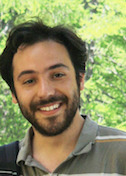
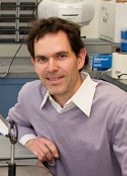
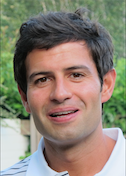
Andrés Palencia
National Institute of Health and Medical Reserves (INSERM)
Published March 27, 2026
In pathogens, RNA carries genetic instructions that are responsible for some of the world’s deadliest and intractable infections.
By targeting RNA in the iconic genetic flow from DNA to RNA to protein in pathogens, researchers in the structural biology laboratory of Andrés Palencia are helping to advance new classes of drugs to combat drug-resistant bacteria and parasites that cause diseases ranging from malaria to the severe diarrheal disease. And one promising new inhibitory molecule against tuberculosis that emerged from the work, ganfeborole, has completed a phase 2 clinical trial.
“We have a strong focus in trying to develop novel therapeutics,” Palencia says. “It's all about protein-RNA complexes.” It’s also about finding more effective drugs for hard-to-treat infections and unmet medical needs, as well as understanding the fundamental biology of RNA processes and their protein partners.
In its translational projects, the Palencia lab has dived deep into two different mechanisms to illuminate and find ways to jam the interaction between RNA and the housekeeping proteins that help translate the genetic code into proteins needed for survival in the fast-growing condition of microbes.
These days, about half of medicines used to treat infections inhibit protein synthesis in the ribosome. The two mechanisms studied in the Palencia lab target earlier steps.
In another curiosity-driven project, the team and their collaborators have been probing a phenomenon related to protein breathing, which also may have implications for drug development.
Tuberculosis Inhibitor
The tuberculosis inhibitor now in clinical testing arose in a collaboration with a pharmaceutical company that had found potentially effective compounds known as benzoxaboroles. The company had been developing one as a topical agent for toenail fungus (approved by the US Food and Drug Administration in 2015), which turned out to target LeuRS.
“This particular project, for me, has been quite exciting,” Palencia sums up. “This was a new protein [target] that was used to develop a new drug, and structural biology was very useful, because it revealed all the small details that could be used to develop a molecule that was much, much better than the original molecule. And all the things that worked at the atomic level in vitro translated very well in vivo.”
Proteins are assembled from amino acids in the order prescribed by messenger RNA. Each of the 20 standard amino acids must be individually fetched and verified by dedicated transfer RNAs (tRNA), then fed into the ribosome machinery churning out the growing polypeptide chain that will become a protein.
Each tRNA has a matchmaker enzyme to attach the correct amino acid and then double check its accuracy. The target for the experimental tuberculosis drug, LeuRS, belongs to the family of specialized matchmakers. More specifically, LeuRS works by first pairing the amino acid leucine to its designated tRNA (called tRNALeu) and then verifying that the correct cargo has been loaded.
“We were quite interested in the mechanism: How does LeuRS recognize a tRNA, and how does it work?” Palencia says. “The machinery has a lot of different domains, and the function of each of them was not very well understood.”
They honed in on two key sites on LeuRS. They solved the crystal structures of the enzyme site loading its amino acid onto its tRNA and in another state of proofreading. (Nature Structural and Molecular Biology, 2012)
“We can use structural biology to understand these atomic differences in the pockets, so that we can really tailor the molecules towards the pathogenic bacteria,” he says. “It was a lot of iterative cycles until we came to the final molecule that has high affinity and selectivity for the bacteria protein,” Palencia says.
The LeuRS tuberculosis inhibitor in clinical testing essentially traps the bacterial LeuRS–tRNA complex in a nonfunctional conformation, leading to inhibition of the LeuRS loading and editing activities.
“This protein is conserved in humans, but there are structural differences, particularly in the editing site and the catalytic site, that you can exploit in a rational manner to design inhibitors that will not bind to the human enzyme, whereas they will have high affinity to the bacterial pathogenic LeuRS,” he says.
Holding the Line Against Leucine
The Palencia team helped developed another compound, epetraborole, tailored to the LeuRS matchmaker enzyme in gram-negative bacteria that cause urinary tract infections and intra-abdominal infections, but phase 2 trials were suspended, because drug resistance developed in a subset of the population in the UTI trial. The team is currently investigating the LeuRS resistance mechanisms to optimize better compounds with reduced risk of resistance.
Their structure-based approach has also helped identify and refine benzoxaboroles that can inhibit LeuRS in parasites, such as plasmodium, cryptosporidium, and toxoplasma, guiding design of potential agents in search of therapies for neglected parasitic diseases.
Another LeuRS project targets parasitic worms by going after their essential symbiotic bacteria, Wolbachia. (Science Advances, 2024) They hope anti-Wolbachia therapies could lead to new treatments for parasitic disease like river blindness and elephantiasis.
The Palencia lab is located in the National Institute of Health and Medical Research (Inserm), in the Institute for Advanced Biosciences, Grenoble, France. Set in a valley surrounded by the French Alps, Grenoble is a major hub for structural biology. When their structure-based studies in tuberculosis began, crystallography was the reigning technique, and Grenoble has its own synchrotron beam lines. Since then, the team has added cryo-electron microscopy (cryo-EM) and continues to tap into nearby nuclear magnetic resonance (NMR) expertise.
In the LeuRS collaboration, the Palencia team concentrates on sample preparation and experiments, while their partners synthesize new inhibitors for them to evaluate. They also collaborate for in vivo testing in animal models.
Another RNA Drug Target
While probing the molecular targets of benzoxaboroles, Palencia and his colleages identified another protein target involved in mRNA processing that is essential for parasite survival. Another part of the lab investigates this enzyme, known as CPSF3.
“CPSF3 inhibitors block the maturation of pre-mRNAs in eukaryotic parasites, like the ones causing cryptosporidiosis and malaria,” Palencia says. “This is a fundamental process for eukaryotic organisms, including parasites causing severe infectious diseases.” Both diseases disproportionately affect children, especially the water-borne cryptosporidiosis leading to severe diarrheal disease and death, with those under age 5 at most risk.
The Scientific Journey
Palencia grew up in La Mancha, Spain, the regional setting for the novel Don Quixote. His family cultivated vineyards, growing monastrell, grenache and tempranillo grapes for the local winemaking cooperative. Making, understanding, and enjoying wine remains an ongoing interest.
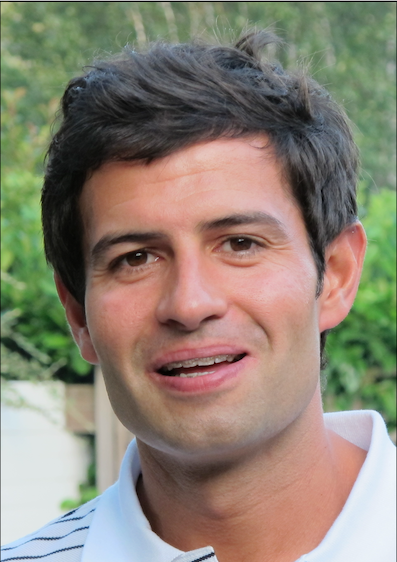
In high school, uncertain of his career trajectory, he sat down at a computer to answer a questionnaire about his interests. “That’s how I went for chemistry, especially biochemistry and protein biophysics,” he says. “I directed myself into science with this computer test.”
He studied at University of Granada, Spain, for his undergraduate degree in chemistry and stayed to earn a PhD in protein biophysics and structural biology. He found structural biology intrinsically more satisfying, because he could see the details at the atomic level, in contrast to biophysics data plotted in graphs. In 2009, he moved to France for a postdoctoral fellowship in structural biology at the European Molecular Biology Laboratory, where after his postdoc he continued as a staff scientist.
“I started looking at all these structures, seeing the inhibitors in there, and all the small details that allow you to see how this antibiotic is working,” he says. “For me, that’s quite amazing. We see all the atoms. Because we have all this information, we can just understand how a molecule is working with a target and use this information to make it better.”
Palencia found structural biology to be powerful, beautiful and awe-inspiring. “I love it,” he says. He still prizes the special moments when he or his team is the first to see a structure on their computer screens that no one has determined before. “And of course, then you share it with the community,” he says.
In 2017, he joined the National Institute of Health and Medical Reserves (abbreviated INSERM in French) and got a permanent position as a group leader there in 2020.
For his daily 10-kilometer commute between home and lab, he pedals a racing bicycle in fair weather and an e-bike in the colder months. He supplements his rides with training runs up and down the steep alpine peaks circling Grenoble.
Protein Breathing
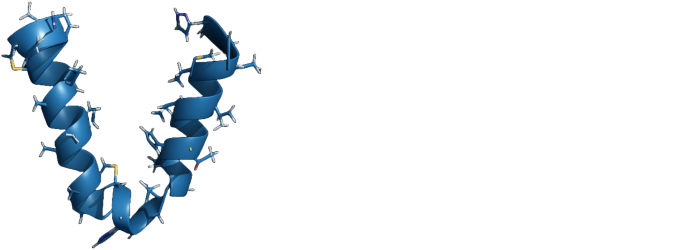
More recently, Palencia has been exploring a phenomenon known as protein breathing (Nature 2022). Images of protein structures sometimes appear static, but they are in continuous motion, with subtle wiggles, expansions and contractions.
A collaborator specializing in NMR had noticed something weird going on in the center of a tyrosine, one of the 20 standard amino acids. The tyrosine core contains a small protein domain widespread among signaling molecules and known to flip 180 degrees. Palencia became well acquainted with the domain in graduate school.
The labs combined the snapshots provided by structures determined by X-ray crystallography and dynamic information from NMR to reconstitute the tyrosine rotation and how its surrounding folded protein pocket changed.
“We were able to trap different states where the pocket was opening, the tyrosine was rotating and then was closing again,” he says. “It goes really, really, really fast, greater than 40,000 times per second, according to our NMR colleagues.”
They studied the wild-type tyrosine. They also examined the effect of mutations and found that even slight changes in protein structure can dramatically alter the dynamic motions.
Although the breathing study started as a “geeky” curiosity in biophysics, Palencia sees implications for health and drug disease one day when researchers can access these dynamics in other molecular systems with improved technology.
“For instance, certain mutations can "lock" a protein in a non-functional conformation or hinder its ability to shift between necessary states,” he notes, “contributing to diseases such as cancer or neurodegenerative disorders. Understanding these motions at a molecular level offers valuable insights for drug design, opening strategies to develop therapies that target specific dynamic states of a protein rather than just its static structure.”
By Carol Cruzan MortonCarol Cruzan Morton is a senior science writer and medical editor in Oregon. She contributes profiles to SBGrid and has also written for Science, Medscape, Oregonian, Boston Globe, and San Francisco Chronicle, among other publications.