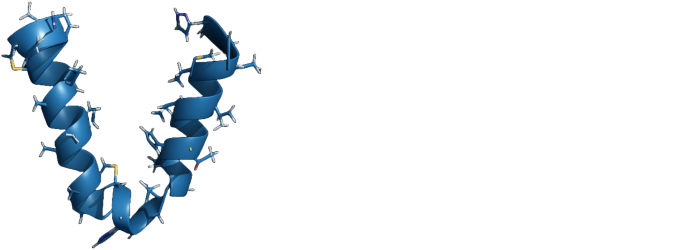
Thursday, April 10th at 11:00am EST -- please join our webinar to hear Matt Baker, Instructor at Baylor College of Medicine, give an introduction to Modeling Macromolecular Structures with Gorgon.
Modeling Macromolecular Structures with Gorgon
Thursday, April 10th at 11:00am EST
Matt Baker, Ph.D.
Instructor, Department of Biochemistry and Molecular Biology,
Baylor College of Medicine
The complex interplay of proteins and other molecules, often in the form of large transitory assemblies, is critical to cellular function. Today, X-ray crystallography and electron cryo-microscopy (cryo-EM) are routinely used to image these macromolecular complexes, though often at limited resolutions. Despite the rapidly growing number of macromolecular structures, few tools exist for modeling and annotating structures in the range of 3-10 Å resolution.To …
Read More»
Our March webinar will feature Thomas Grant, postdoctoral scholar at the Hauptman-Woodward Medical Research Institute. Thomas will give us a two part primer on Biological Small Angle Scattering (SAXS). This webinar will be recorded and made available to members through the SBGridTV YouTube channel. Please be sure to subscribe to this channel to receive notifications when new webinars are added.
Part I: Introduction to Biological Small Angle Scattering
Part II: Advanced Applications of Biological Small Angle Scattering
Thomas Grant
Postdoctoral Scholar
Hauptman-Woodward Medical Research Institute
This review (Putnam et al, Q REv Biophys. 2007 Aug; 40(3):191-285) is recommended for anyone interested in additional information on using SAXS in combination with crystallography and computational methods.
Small angle scattering is …
Read More»
Registration Closed. Contact events@sbgrid.org with questions
We are pleased to announce that registration is now open for the 2014 SBGrid/NE-CAT Computing School. Quo Vadis Structural Biology 2014? will focus on Data Processing in Crystallography, including a Phenix Workshop.
Quo Vadis Structural Biology 2014?
SBGrid/NE-CAT Computing School
Data Processing in Crystallography
June 5-6, 2014
Advances in Structure Determination with Phenix
June 7, 2014
Paul Adams, Lawrence Berkeley National Laboratory
Nathaniel Echols, Lawrence Berkeley National Laboratory
Tom Terwilliger, Los Alamos National Laboratory
Improved Structural Modeling Using BioLuminate
June 7, 2014
Melissa Landon, Ph.D., Schrodinger, Inc.
Harvard Medical School
Boston, MA
Registration Fee: $200
register here
Lodging information is posted on the registration site.
Scientific …
Read More»
Thursday, February 6th at 11:00am EST -- please join our webinar to hear Wladek Minor's presentation entitled HKL-2000/HKL-3000: Toward the Future of Structural Biology. Wladek is Professor of Molecular Physiology and Biological Physics at University of Virginia.
HKL-2000/HKL-3000: Toward the Future of Structural Biology
Thursday, February 6th at 11:00am EST
Wladek Minor
Professor of Molecular Physiology and Biological Physics
University of Virginia
For more information on HLK2000 software, check out the HKL2000 website.
Webinar Connection Instructions: We are using the FUZEBOX Meeting application to host our webinars, which is compatible with Mac, Liuux, and Windows computers. To connect, follow the Meeting URL and enter the meeting number:
Read More»
Thursday, December 5th at 11:00am EST -- please join our webinar to hear Homay Valafar, Associate Professor at the University of South Carolina, discuss Structure Validation of Proteins using REDCAT.
Structure Validation of Proteins using REDCAT
Thursday, December 5th at 11:00am EST
Homay Valafar
Associate Professor, Dept of Computer Science and Engineering
University of South Carolina
The utility of residual dipolar couplings (RDCs) has increased precipitously in the recent years. The utility of this new source of NMR data includes direct structure determination of proteins, nucleic acids and carbohydrates. RDCs have also been used to deduce the relationship of sub-units in multi-domain proteins and describe bound ligand geometry. Recently, RDCs have been utilized in the context of high-throughput structure …
Read More»